First things first – everything begins with a sheep – a Shetland Sheep!
We shear our own sheep and we do it, where possible, in the fields that they graze. This reduces their stress because we aren’t ’rounding’ them into a pen. Instead, they wander over to us and we shear them there and then – all over within a few minutes – and the sheep continue to graze as they were before.
As you can see from the video above, they don’t seem too concerned by the process.
The fleece
The fleece has an initial inspection in the field and any dirty bits and vegetation are removed and saved for use as a weed suppressor.
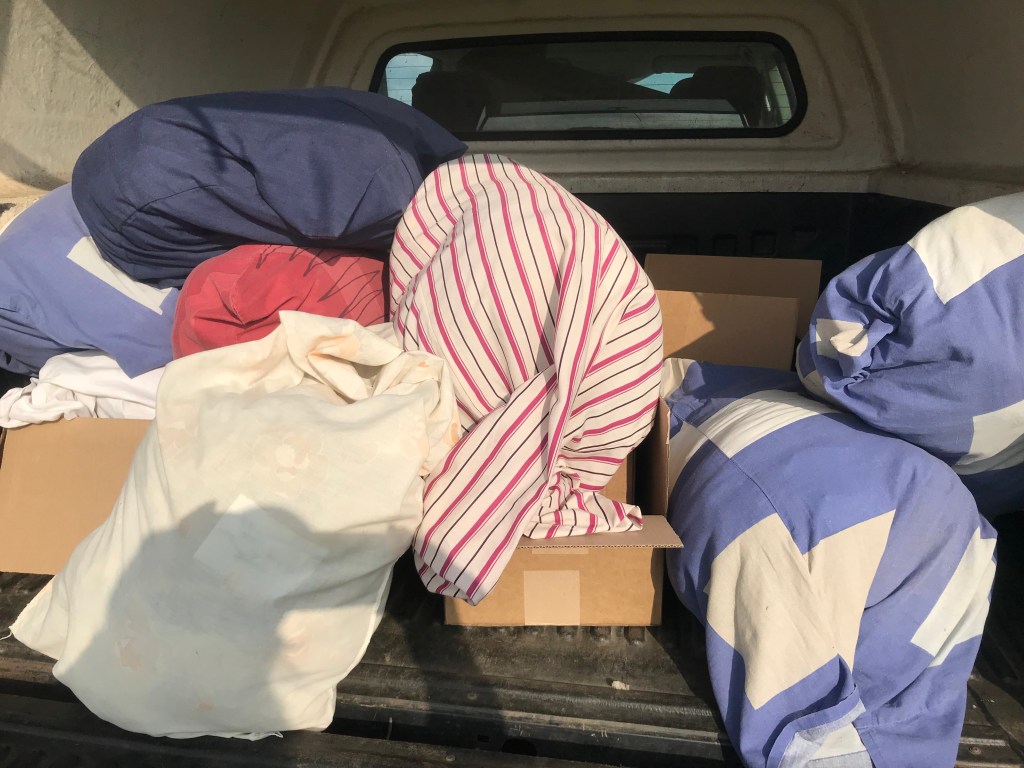
Each fleece is labelled and stored separately in pillow cases.
Later, the fleece is more thoroughly inspected and is divided by colour and quality or saved for making into rugs. We have 100 sheep so it can take some time. We keep Shetland sheep specifically as they have many colour variations and the wool is super soft.
Processing
The wool is then carefully washed and dried. This is followed by the carding process where the wool is ‘brushed’ into the same direction, making it into a more useable form. Carding can be done by hand or by using a drum carder.
Some of the carded wool is then wet felted to make ‘canvases’ for my artwork and the coloured wool is ready to needle felt onto the ‘canvas’.
Wet Felting (simple description)
Wet felting is a process of using layers of carded wool, hot water and soap. Wool is layered and wet with hot soapy water. The wool is hand agitated and manipulated to help bind the fibres together. The finished piece is washed and dried. Coloured wool is then applied to the finished canvas by needle felting.
Needle Felting (simple description)
Needle felting is purely a process of using a sharp barbed needle and wool. The needle ‘catches’ the wool and as it is pushed down into the other wool fibres it ‘locks’ them together.
 C B-A
C B-A 